Choline is an essential nutrient that helps build cell membranes, make the neurotransmitter acetylcholine, move fat out of the liver, and support fetal brain and spinal cord development. Adult women need 425 mg a day and adult men 550 mg, with 450 mg in pregnancy and 550 mg while breastfeeding. Your body makes some choline but not enough, so most of it has to come from food, with eggs and beef liver as the richest sources.
Choline benefits start with cells, nerves, and the liver
Choline is the building block of acetylcholine, a neurotransmitter needed for memory, mood, muscle control, and other nervous-system functions. That role explains why choline matters for normal brain function. It does not mean extra choline automatically improves memory.
The body also uses choline to make phosphatidylcholine and sphingomyelin, two major phospholipids in every cell membrane. Phosphatidylcholine accounts for about 95% of all choline in human tissue. Choline also takes part in gene expression, cell signaling, and lipid transport and metabolism.
In the liver, phosphatidylcholine is needed to form and release VLDL particles, which carry fat out of the liver. A real shortage can therefore lead to fat buildup and liver damage. Betaine, made from choline, also works with folate to convert homocysteine into methionine, which keeps blood homocysteine in check.
How much choline you need each day
There were not enough data to set an RDA, so the National Academy of Medicine (formerly the Institute of Medicine) set an Adequate Intake (AI) instead. The main criterion was preventing liver damage, measured by the liver enzyme alanine aminotransferase.
| Life stage | Adequate intake of choline |
|---|---|
| Infants 0–6 months | 125 mg/day |
| Infants 7–12 months | 150 mg/day |
| Children 1–3 years | 200 mg/day |
| Children 4–8 years | 250 mg/day |
| Children 9–13 years | 375 mg/day |
| Teens 14–18 years | 550 mg/day for males; 400 mg/day for females |
| Adults 19 years and older | 550 mg/day for men; 425 mg/day for women |
| Pregnancy | 450 mg/day |
| Breastfeeding | 550 mg/day |
In the United States, average choline intake has been reported at about 402 mg/day for men and 278 mg/day for women. Just 11% of men and 6% of women reach the AI, so it is worth checking your diet, especially if you rarely eat eggs or animal foods.
Foods high in choline make daily intake easier
| Food | Serving | Choline |
|---|---|---|
| Beef liver, pan-fried | 3 oz (85 g) | 356 mg |
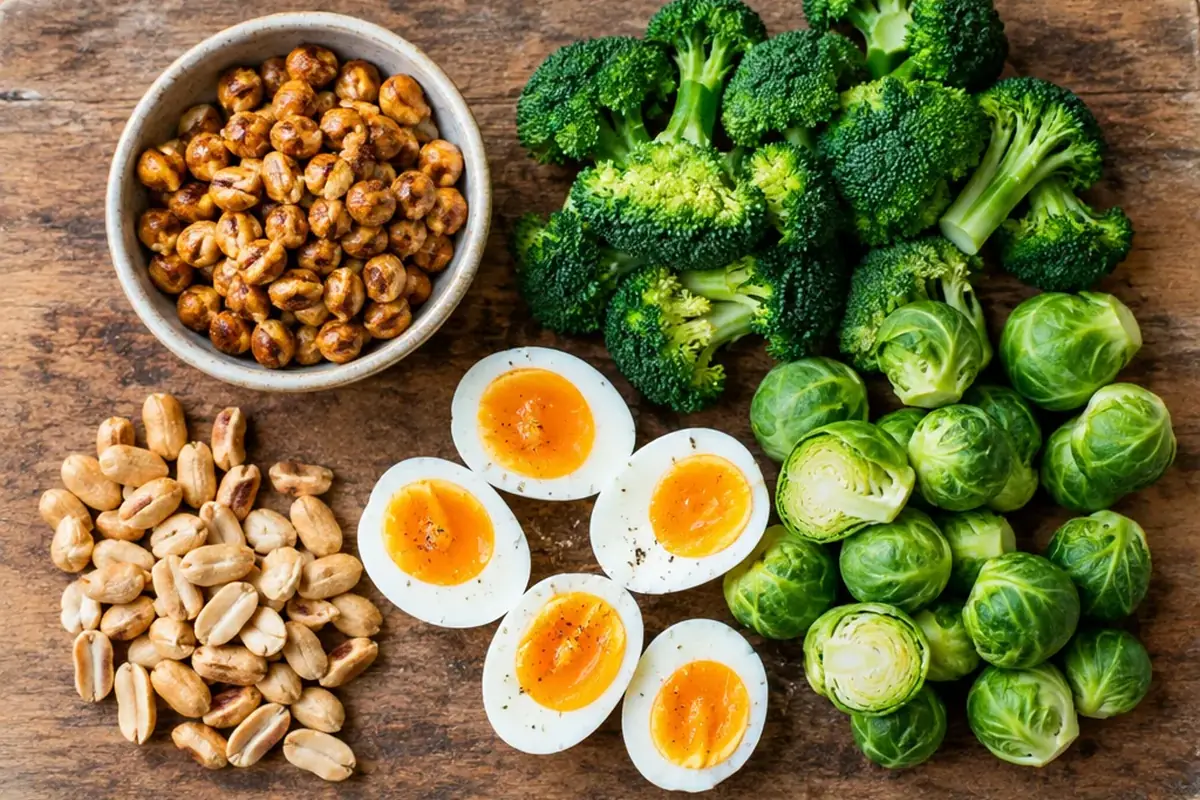
| Egg, hard-boiled | 1 large | 147 mg |
| Beef steak | 3 oz (85 g) | about 117 mg |
| Soybeans, roasted | 3 oz (85 g) | about 107 mg |
| Chicken breast, roasted | 3 oz (85 g) | about 60–70 mg |
Almost all of an egg’s choline sits in the yolk. Other useful sources:
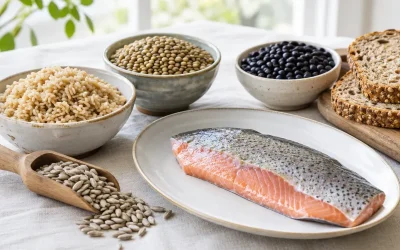
- Fish such as salmon, cod, and tilapia are useful sources of choline.
- Broccoli and Brussels sprouts, peanuts, dairy foods, and whole grains are also good sources.
One analysis of U.S. diets found it extremely difficult to reach the AI without eating eggs. If you skip them, plan for liver, meat, fish, soy, or dairy instead.
Pregnancy and breastfeeding raise the stakes
During pregnancy, choline is essential for fetal neural-tube formation. Low choline status has been associated with a higher risk of neural-tube defects, including spina bifida. In one comparison, women with the lowest blood choline levels had a 2.4-times higher risk than women with average levels.
The gap between need and intake is large: about 90–95% of pregnant women consume less than the 450 mg AI, and prenatal supplements typically contain little or no choline. Vegetarian and vegan diets make it harder, because the richest sources are animal foods. Check the label of your prenatal vitamin and talk with your prenatal-care provider about how to close the gap.
Choline is good for breastfeeding and needed in larger amounts: the AI is 550 mg/day, 125 mg more than for women who are not pregnant or breastfeeding. Breast milk carries choline to the baby, and its level stays fairly constant throughout breastfeeding. The infant AI of 125 mg/day is based on how much choline a baby gets from breast milk.
Choline deficiency is uncommon but not trivial
In healthy adults, severe choline deficiency is rare because the body synthesizes some choline. That production does not meet the full requirement, though. Estrogen boosts the body’s own choline production, so premenopausal women may need less from food. Variants in the PEMT gene can raise the need for dietary choline.
Among possible signs are muscle pain or damage, tingling linked to nerve damage, memory loss, mood changes, and fatigue. Elevated liver enzymes and fatty liver can be biochemical signs. Because these symptoms overlap with many conditions, they cannot diagnose choline deficiency by themselves. See a doctor for persistent symptoms or liver concerns. Deficiency is common in people fed only intravenously (total parenteral nutrition) and can impair liver function.
Should you take a choline supplement?
Choline supplements can help fill a specific dietary gap, but they are not proven memory boosters or a replacement for food. Common forms include choline bitartrate, phosphatidylcholine (lecithin), alpha-GPC, and CDP-choline (citicoline). Choline bitartrate contains about 41% choline by weight; alpha-GPC about 40%; and citicoline about 18.5%. Typical products provide 10–250 mg per serving, while multivitamins usually contain no choline.
For brain health, observational research has linked higher intake with better memory measures, but a review of 12 randomized trials found no clear clinical benefit from lecithin supplementation for Alzheimer’s or Parkinson’s dementia. If you are pregnant, breastfeeding, have liver or kidney disease, depression, Parkinson’s disease, or trimethylaminuria, ask a clinician or pharmacist before adding a supplement.
Common choline myths
“More choline means better cognition.”
Choline supports acetylcholine and normal nervous-system function, but the evidence does not establish that high-dose supplementation improves cognition in healthy people.
“Choline grows hair.”
There is no strong evidence that choline directly promotes hair growth or treats hair loss in healthy people. It supports normal cell-membrane, liver, and nerve functions; hair loss is not a typical sign of choline deficiency.
“You cannot get too much from supplements.”
You can. The adult upper limit is 3,500 mg/day from food and supplements combined. Very high intakes, starting at 7,500 mg/day in reports, have been linked to low blood pressure, sweating, fishy body odor, and gastrointestinal effects. Headaches can also occur with supplements, particularly at high doses or with a poorly tolerated form. Too much choline can also raise levels of TMAO, a compound made by gut bacteria that is linked to higher heart disease risk, although it is unclear whether TMAO causes the harm or only signals it. For teens the upper limit is 3,000 mg/day, for children 9–13 years 2,000 mg/day, and for children 1–8 years 1,000 mg/day. Infants should get choline only from breast milk, formula, and food.
Frequently Asked Questions
What are the benefits of choline?
Choline helps make acetylcholine, supports cell membranes, participates in lipid metabolism and signaling, and helps the liver export fat. It is also important for fetal neural-tube formation and infant development.
What is choline found in?
Beef liver and egg yolks are particularly concentrated sources. Beef, roasted soybean, chicken, fish, broccoli, Brussels sprouts, peanuts, dairy foods, and whole grains also provide choline.
Can choline cause headaches?
Yes. Headaches may occur with choline supplements, especially at higher doses or with an unsuitable form. Food sources are less commonly associated with these effects; discuss recurring headaches with a clinician.
How much choline do you need per day?
Adult men need 550 mg/day and adult women 425 mg/day under the AI. The target is 450 mg/day in pregnancy and 550 mg/day while breastfeeding.
Can you take too much choline?
Yes. Adults should stay below the 3,500 mg/day upper limit from all sources unless a clinician directs otherwise. High intake can cause low blood pressure, sweating, nausea, fishy body odor, and potentially liver damage.